
Reliable Through-The-Wall AC Units For Bedrooms, Apartments, And Small Spaces
As an Amazon Associate, I earn from qualifying purchases. Some links may earn us a commission at no extra cost to you.
Through-the-wall ACs are awesome when you want a cleaner look (no window blocked) and a more permanent install—but you have to match the sleeve size and the power (115V vs 230V). I prioritized models that are easier to fit into common wall sleeves and that make sense for real room sizes.
Top picks
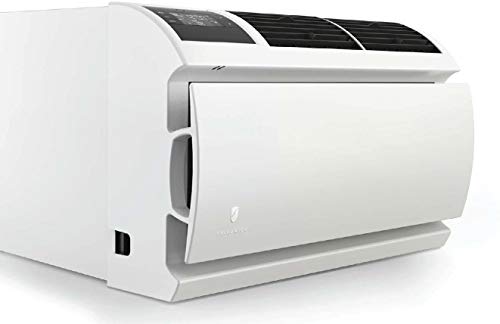
Friedrich WallMaster WCT12A30A — Best for “do it once, do it right” installs (230V)
A solid, classic through-the-wall pick for larger bedrooms and living spaces that already have a 230V outlet.
Why it wins: A purpose-built through-the-wall chassis from a brand that’s known for this category.
Pros
- Built for true through-the-wall installs (not a window unit hack)
- Good choice when you already have a standard wall sleeve opening
- Simple controls with remote convenience
Cons
- Needs 230V power (not a standard plug)
- Sleeve fit varies—measure your cutout carefully
Trade-offs / Who should skip (failure cases):
- Skip if your home only has 115V outlets where the unit will go.
- Skip if your sleeve/cutout is non-standard and you can’t confirm fit.
Scores: Performance 4/5 • BTU-fit 4/5 • Ease of use 4/5 • Value 3/5
Friedrich Uni-Fit 12,000 BTU (115V) — Best for 115V rooms that still need strong cooling
If you’re stuck with a regular 115V outlet but still want “real” cooling power, this is the angle.
Why it wins: Uni-Fit designs are aimed at fitting more common wall-sleeve situations than many niche models.

- RV/TRAILER COMPATIBLE: This BBQ and Grill station comes with a bracket to mount right onto the side...
Pros
- 115V convenience (easier electrical situation for many homes)
- Good option when you want a cleaner through-wall install vs window
- Brand depth in through-wall support
Cons
- Availability can fluctuate by variant
- Verify sleeve compatibility before committing
Trade-offs / Who should skip (failure cases):
- Skip if you need built-in heat (some variants are cooling-only).
- Skip if your sleeve opening is odd-sized or damaged.
Scores: Performance 4/5 • BTU-fit 4/5 • Ease of use 4/5 • Value 3/5
Koldfront WTC12001W — Best through-the-wall AC with heat (208/230V)
For shoulder seasons (spring/fall), a heat/cool combo can be the difference between comfortable and annoying.
Why it wins: Heat + cool in a single through-wall format—great for guest rooms, garages, or apartments that run chilly at night.
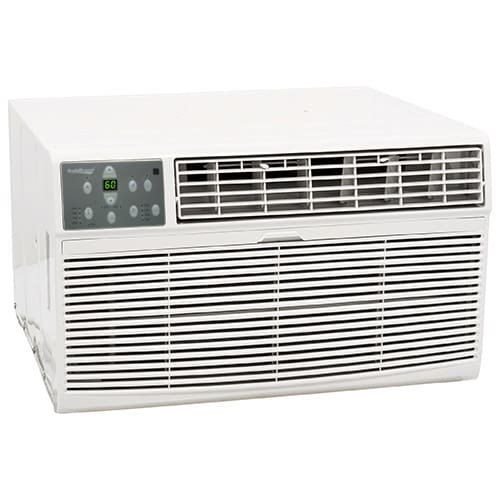
- 12000 BTU cooling: 1330W/6.6A; 10600 BTU heating: 3450W/15.5A
- 450-550 sq. ft. coverage area; remote control included
- 4-way air directional louvers; Three (3) fan speeds; Four (4) operation modes
Pros
- Heat + cool combo for year-round comfort
- Nice for spaces where adding a separate heater is a pain
- Good fit for “set it and forget it” use
Cons
- 208/230V requirement limits where it can go
- Heat mode isn’t a substitute for whole-home heating
Trade-offs / Who should skip (failure cases):
- Skip if you don’t have 208/230V available.
- Skip if you’re expecting it to heat like a central system in a cold climate.
Scores: Performance 4/5 • BTU-fit 4/5 • Ease of use 4/5 • Value 4/5
Koldfront WTC14012WCO230V — Best for bigger rooms (230V)
When you’re cooling a larger living room or open area, you’ll feel the difference between “barely keeping up” and “actually comfortable.”
Why it wins: Higher-capacity option aimed at larger coverage compared with typical 8k–12k picks.
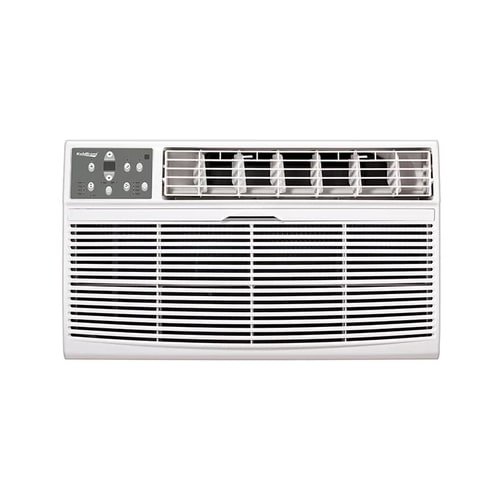
- 14,000 BTU cooling; Coverage area 550-700 square feet; EER 9.4
- PLEASE NOTE: This is a 230V unit and requires a 230V outlet; Plug type LCDI 6-15P (Unit will not...
- Dimensions: 14.5" H x 24.2" W x 20.3" D; Weight: 75.2 lbs
Pros
- Better match for larger spaces than most entry models
- Helpful when your room gets strong afternoon sun
- Remote control convenience
Cons
- 230V only
- Oversizing can make humidity control worse in small rooms
Trade-offs / Who should skip (failure cases):
- Skip if your room is small—oversized units can short-cycle and feel clammy.
- Skip if your sleeve opening can’t support the chassis size.
Scores: Performance 4/5 • BTU-fit 4/5 • Ease of use 4/5 • Value 3/5
Keystone 10,000 BTU Through-the-Wall — Best budget-friendly cooling for medium rooms
If you’re trying to cool a medium bedroom or office without paying for extra features you won’t use, Keystone is the value lane.
Why it wins: Straightforward cooling with the basics (remote/timer/energy modes) that most people actually care about.
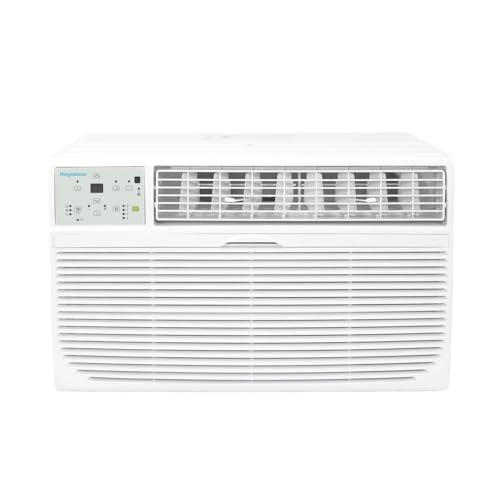
- Reliable Through the Wall Air Conditioner: Our powerful 10,000 BTU through the wall ac unit is what...
- Maximum Comfort: Featuring 3 cooling modes, 3 fan speeds, 4-way adjustable air louvers and a...
- Space Saving Design: Keep your window view and floor space with this through wall air conditioner...

Pros
- Solid “basics-first” choice for typical bedrooms/offices
- Usually an easier pick when you don’t need smart features
- Good match for mid-size rooms if properly sized
Cons
- Double-check sleeve fit—through-wall sizing isn’t universal
- Feature depth varies by exact model/variant
Trade-offs / Who should skip (failure cases):
- Skip if your space is large or very sunny—go up a capacity tier.
- Skip if you need premium quiet performance above all else.
Scores: Performance 3/5 • BTU-fit 4/5 • Ease of use 4/5 • Value 4/5
Quick compare
- Most “set-and-forget” install vibe (230V): Friedrich WallMaster WCT12A30A
- Strong 115V option: Friedrich Uni-Fit 12,000 BTU (115V)
- Best heat + cool combo: Koldfront WTC12001W
- Best for bigger rooms: Koldfront WTC14012WCO230V
- Best value for medium rooms: Keystone 10,000 BTU Through-the-Wall
Buying guide
1) Match BTUs to the room (don’t guess)
- Small bedrooms/offices usually do best with the lower capacity tier.
- Medium rooms typically land in the middle tier.
- Big living rooms/open areas often need the higher tier.
Rule I use: If your room gets strong sun, has high ceilings, or you cook nearby, size up one tier.
2) Confirm voltage before anything else
- 115V = typical household outlet.
- 208/230V = special outlet (common in some apartments/older installs).
If you buy the wrong voltage, you’re stuck—so I treat this as non-negotiable.
3) Sleeve/cutout fit is the make-or-break detail
“Through-the-wall” doesn’t mean universal. Measure:
- Wall sleeve opening (width/height/depth)
- Existing sleeve brand (if you can identify it)
- Whether your sleeve is in good shape (no rust/bend)
If I can’t verify a model’s sleeve compatibility for a specific sleeve brand, I assume you’ll need to measure and compare carefully.
4) Heat function: nice, but know what it is
Heat/cool models are great for mild cold (or quick warm-ups), but they’re not a replacement for whole-home heat in colder climates.
FAQs
Are through-the-wall AC units better than window units?
They can be, mainly for aesthetics, security, and a more permanent install. Performance depends more on sizing, install quality, and the specific model than the mounting style.
Do I need a wall sleeve?
Usually yes—many through-the-wall units are designed to slide into a sleeve. If you already have one, match the new unit to it (or be prepared to replace the sleeve).
Should I pick 115V or 230V?
Pick what your space supports. If you already have a 230V outlet and need more cooling (or heat/cool), 230V opens more options. If not, 115V keeps install simpler.
What’s the biggest mistake people make?
Buying by BTU alone and ignoring sleeve fit/voltage. The “best” unit is the one that actually fits your wall opening and power setup.
As an Amazon Associate, I earn from qualifying purchases.